Hiring in Washington State? Big Changes Coming with Background Checks
If your company hires in Washington State, it’s time to take a look at your hiring policy. Major updates are coming related to the use of criminal background checks.
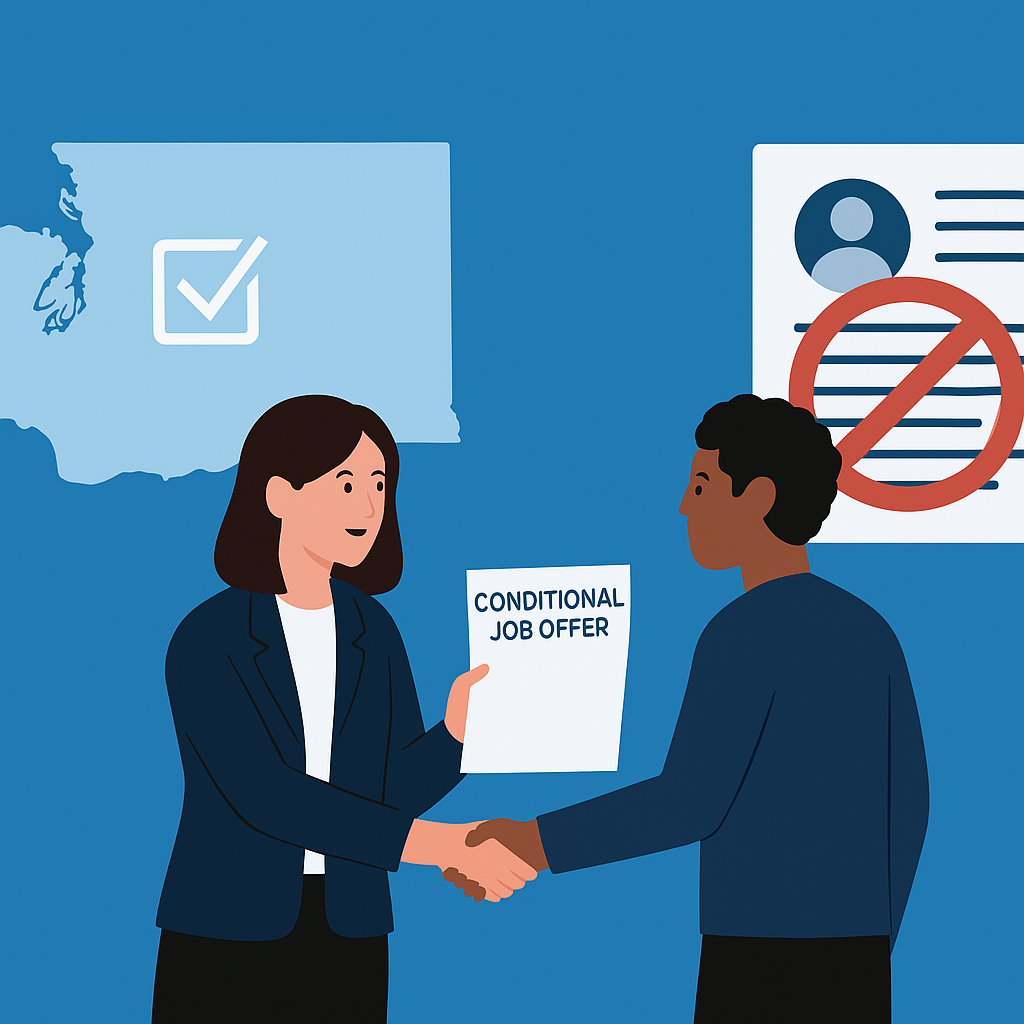
Starting July 1, 2026 updates to Washington’s Fair Chance Act (WFCA) will go into effect. These new rules are designed to give people with criminal records a fairer shot at employment, and they might be the strictest in the country.
What’s Changing?
1. No More Asking About Criminal History Upfront: You can not ask about someone’s criminal record until after you’ve decided they’re qualified and made them a conditional job offer.
2. No Blanket Rejections: You can not have a policy that says “we don’t hire people with records”. You also can not reject someone because they didn’t bring up their criminal history before you made the offer.
3. “Criminal Record” Means More Than You Think: The updated law broadens the definition of a criminal record to include not only arrests, but also any information about them. Even if the person wasn’t convicted. That means background check results, news articles, or third-party reports could fall under this category.
What this means is that Employers can not take adverse action based on an arrest alone, a juvenile conviction, or vague info that didn’t lead to an adult conviction. Unless it’s a current arrest where the person is awaiting trial. Only adult convictions can be considered, and even then, only if there’s a legitimate business reason and proper steps are followed.
4. Disclosure Rules After a Conditional Offer: After the offer, you can tell the applicant that a background check is part of the process. If the applicant volunteers info about their criminal record, you must give them a written explanation of their rights under the WFCA and share the state’s official Fair Chance Guide.
What If You Find Something?
You can only take action (like rejecting a candidate or firing someone) based on a criminal conviction if you have a “legitimate business reason.” This means:
-
You believe the conviction relates directly to the job.
-
You think the conduct might put people, property, or your business at risk.
Before making a decision, you must consider:
-
How serious the offense was
-
How many convictions there are
-
How long it’s been since the conviction (excluding prison time)
-
The specific duties of the job
-
Whether it’s a public-facing role
-
Any info the applicant provides about rehabilitation, training, or good conduct
You also have to notify the applicant, hold the position open for at least two business days, and give them a chance to explain or correct the record.
What If You Move Forward with Rejection?
If you decide not to hire (or take any negative action), you must put your decision in writing, explaining why and what factors you considered.
And if the person reports your company for violating these rules? You can’t retaliate.
Penalties Are Getting Steep
Violating the new WFCA rules could cost you:
-
Up to $1,500 for a first violation (though you might get off with a warning)
-
Up to $3,000 for a second
-
Up to $15,000 for a third or more
The Attorney General can also come after you for unpaid wages, penalties, damages, and legal fees.
What Employers Should Do Now
If you have employees in Washington, start prepping:
-
Review your background check policy—especially when and how you screen.
-
Train your team on how to assess convictions using the “legitimate business reason” test. A “legitimate business reason” means the conviction has something to do with the job. For example, if someone was convicted of theft, it might be reasonable to not hire them for a job that involves handling money. If someone has a DUI, it could be a concern for a driver. Employers have to show that the conviction could affect how well the person can do the job or if they might put others at risk. And they have to explain their decision, not just assume the worst.
-
Work with legal counsel to get your hiring process up to speed before these changes kick in.
Want help updating your screening practices before 2026? Reach out, we’re be happy to walk you through it.