Every time I see a blatant “contractor only” in a job description, sometimes from an actual agency I cringe. I know they probably mean well. However in legal terms, caregivers and nannies are almost always employees and calling them contractors doesn’t change that.
Starting January 1, 2027, getting this wrong in California gets a lot more expensive (like most things there). If you run a home care agency, a nanny agency, or are a family or individual hiring places caregivers, I wanted to break down what’s changing and what you can do about it now.
What’s new is who gets to go after that money. Under SB 1444, each employee, the Labor Commissioner, or a public prosecutor can now recover those penalties as damages paid to the worker (Nixon Peabody). In plain terms, a caregiver doesn’t have to wait for the state to take their case anymore. They can file a wage claim and ask for it themselves.

What California’s SB 1444 changes
Signed on August 27, 2026, SB 1444 goes into effect January 1, 2027 (Davis Wright Tremaine). California already had big penalties for knowingly misclassifying workers under Labor Code section 226.8:| Type of violation | Penalty per violation |
|---|---|
| Willful misclassification | $5,000 to $15,000 |
| Pattern or practice of willful misclassification | $10,000 to $25,000 |
Why caregivers and nannies are employees
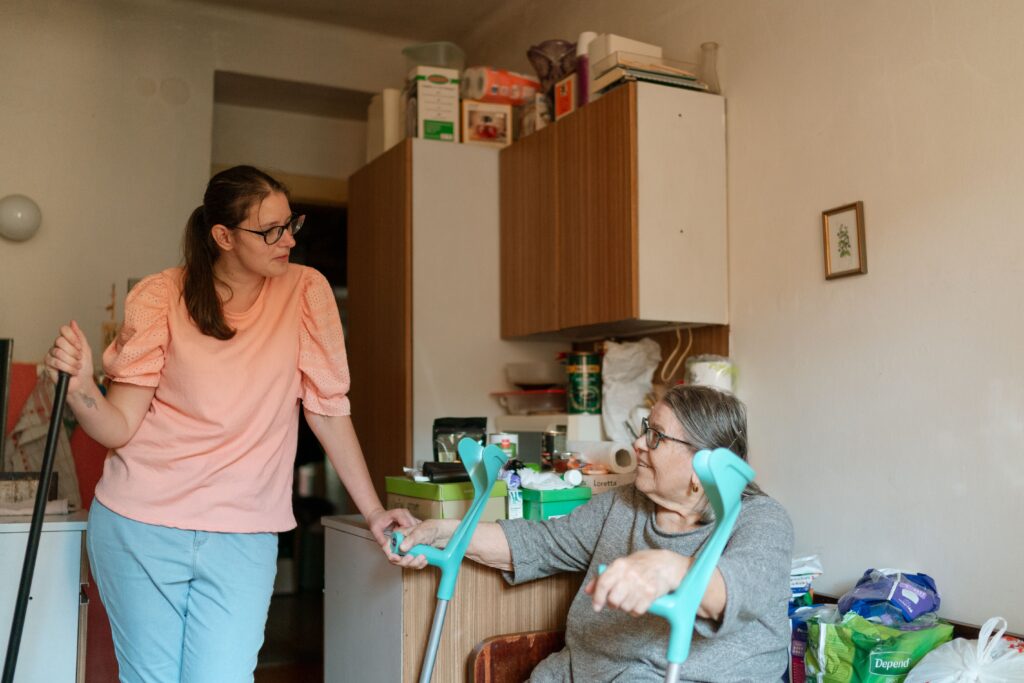
It comes down to control. Whoever controls the work is usually the employer. Think about what a caregiver or nanny job actually looks like. Someone else decides their schedule, where they work, and what they do all day, from meals and medication reminders to school pickup. That’s a lot of control if you ask me. The IRS agrees. In Publication 926, it says people who do household work, like nannies and in-home caregivers, are generally household employees. It also says it doesn’t matter whether the job is part time or whether the worker came through an agency. California goes even further with something called the “ABC test.” A worker is an employee unless the business can prove all three of these:- A: The worker is free from the business’s control.
- B: The work is outside the usual course of the business.
- C: The worker runs their own independent business doing that kind of work.
So who is the employer?
A caregiver or nanny is someone’s employee. The real question is whose.- Hired directly by a family: The family is the employer. They’re responsible for payroll taxes and a W-2.
- Employed by an agency: If the agency hires the caregiver, sets the pay, schedules the shifts, and sends them out to clients, the agency is the employer.
- Placed by a referral or placement agency: If the agency just makes the match and the family hires and pays the caregiver, the family is usually the employer.
Caregiver hiring red flags in your job ads
“Contractor only” is the one I see most, but keep an eye out for phrases like these too:- “1099 position”
- “You’ll be responsible for your own taxes”
- “Independent caregiver” when your agency sets the schedule and the pay
How to fix your caregiver hiring before January 1, 2027
- Take a look at your team. Make a list of everyone who provides care and how they get paid. Anyone on a 1099 deserves a second look.
- Move caregivers to W-2 payroll. Withhold taxes, pay overtime, and follow your state’s wage rules. We recommend HomePay.
- Update your job postings. Pull the contractor language from job boards, your website, and social media.
- Talk to an employment attorney. Every situation is a little different, and a good lawyer can help you fix past issues the right way.
- Make sure every caregiver is screened. Switching your team to W-2 is the perfect time to confirm everyone has a current background check on file. Our caregiver background checks page walks through what we run for agencies, and What Shows Up on a Background Check explains what you’ll see on a report.
The bottom line
Caregivers and nannies do some of the most trusted work out there. They’re in people’s homes, caring for kids and aging parents. They deserve to be treated as the employees they are, and getting it right protects your caregivers, your clients, and your business. At Sure Check, we work with home care agencies, nanny agencies, and families every day. Most of our checks come back in under 8 hours, so screening never has to slow down your caregiver hiring. If you place nannies, check out our nanny background checks page. Have questions or want to see how it works? Reach out to me. I’d love to chat. This post is for general information only and isn’t legal advice. Please talk with an employment attorney about your specific situation.Sources
- California’s New Employment Laws: Get Ready for 2027, Davis Wright Tremaine
- Get ready for 2027: New California employment laws, Nixon Peabody
- California Senate Bill 1444 (Chapter 162, Statutes of 2026), LegiScan
- Publication 926, Household Employer’s Tax Guide, IRS
Written by
Maggie Benson, Founder & President of Sure Check Background Screening
Maggie founded Sure Check to give care agencies, staffing firms and growing businesses fast, affordable and FCRA-compliant background screening with real, U.S.-based support. About Sure Check